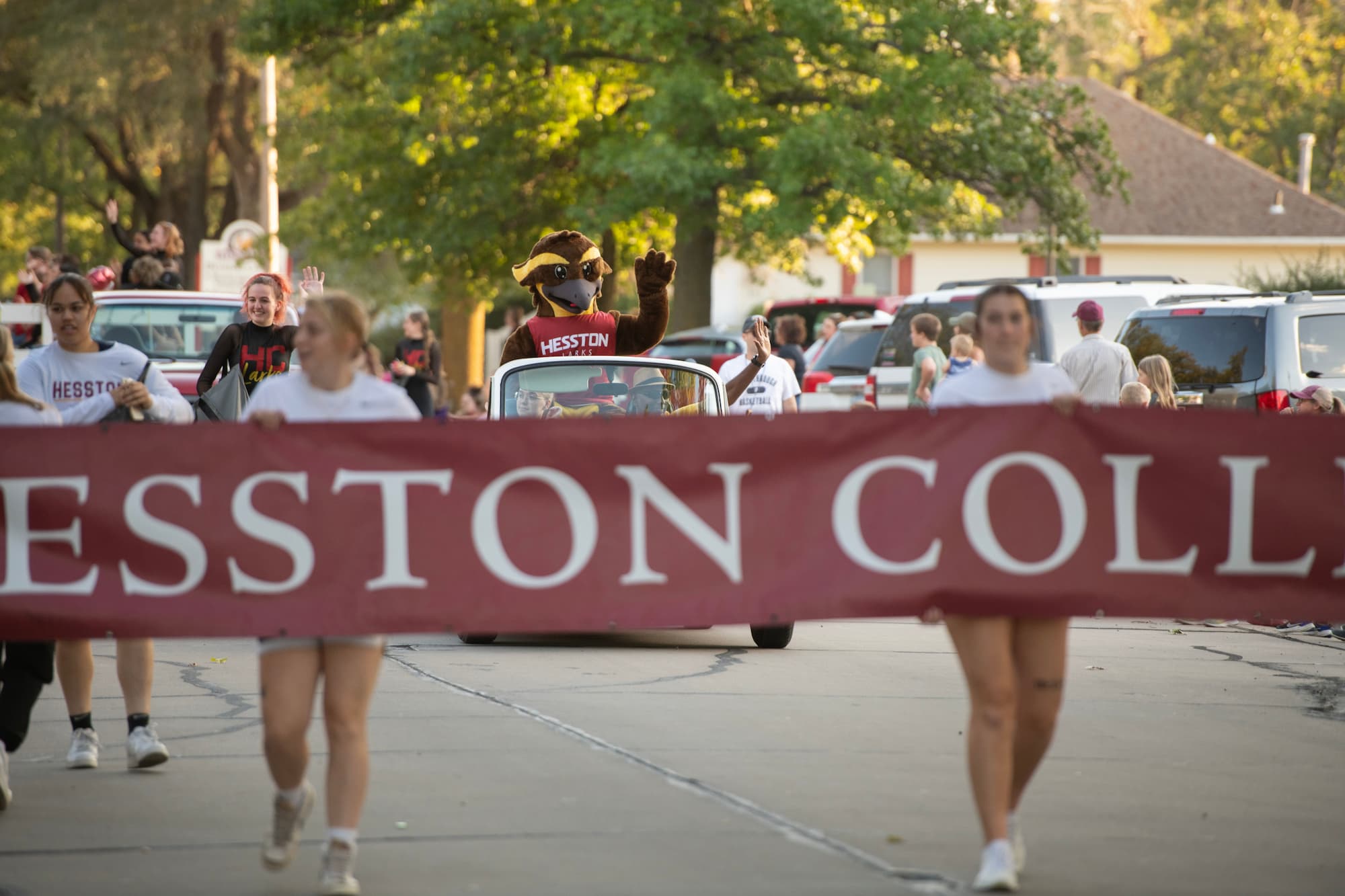

A wise past president of a college told me that I would receive more affirmation and criticism of athletics and music than any other aspect of the college. He was right, and the reason is obvious. Athletics, music, and drama are public—where the public joins the campus—whereas classes, laboratories, field trips, and mod activities are not.
As you will read in the following pages, the decision to begin intercollegiate athletics at Hesston was not an easy choice at the time. When programs were begun, it was with the ideal that athletics would complement the academic, social, and spiritual life of the student. Today, we continue with that ideal. As you read the stories of former athletes and the column by Art Mullet (see Page 19), you will note that athletics are an important part of the whole Hesston experience.
Part of the genius of Hesston College is that the spiritual and social values of the institution are integrated throughout all of our activities rather than only given attention in classes and chapels. Rather than being an add-on or extra that is separate from academics and student life, athletics is and must be one of the laboratories where teamwork, discipline, competition, and service are taught and tested.
Given this mission for athletics at Hesston College, we must continue to promote excellence in the programs themselves, while keeping those programs aligned with the broader mission of the college. The growth of college athletics as an end in itself, fed by increasing emphasis, time, and money spent on athletics in schools and camps and the allure of professional sports, presents a challenge to college athletics at all levels.
In a study funded by the Knight Foundation in 1991 and updated in 2001, the Knight Commission on Intercollegiate Athletics noted that athletics and academics had become two separate cultures, with damaging side effects of commercialization, academic transgressions, and a financial arms race between colleges for coaches, facilities, and perks for donors. However, this does not necessarily need to be the case and thankfully is not the case at Hesston College. As the report also noted, “Sports at all levels have been a source of immense satisfaction, self-discipline, and achievement for tens of thousands of young men and women.”
I am grateful for the leaders and coaches of our athletic programs who have nurtured the whole person while fielding competitive teams and helping students have great experiences together. I am also grateful for the support of the Hesston community and many who contribute financially to the athletic program.
Howard Keim, president